
1. Compare Scope, Not Just Fees
Designers include very different ranges of service within their scope. Some charge a fee, produce CAD drawings, order your cabinets, and just stop there. Others hand over drawings only, which can get lost in translation when you take them to a manufacturer or cabinet store. Still others bill hourly for every team member, so five people working on your kitchen means five hourly charges simultaneously.
At Fresh Design Group, we are white glove, meaning we start with extremely detailed kitchen drawings, help select your cabinet styles, woods, and colors, specify your countertop after shopping side by side with you, suggest styles of hardware, lighting, tile, flooring… everything that goes into your kitchen. We order everything for you, and then we work from start to finish to make sure your design is executed appropriately. We do not charge a design fee provided you order the cabinetry through us.
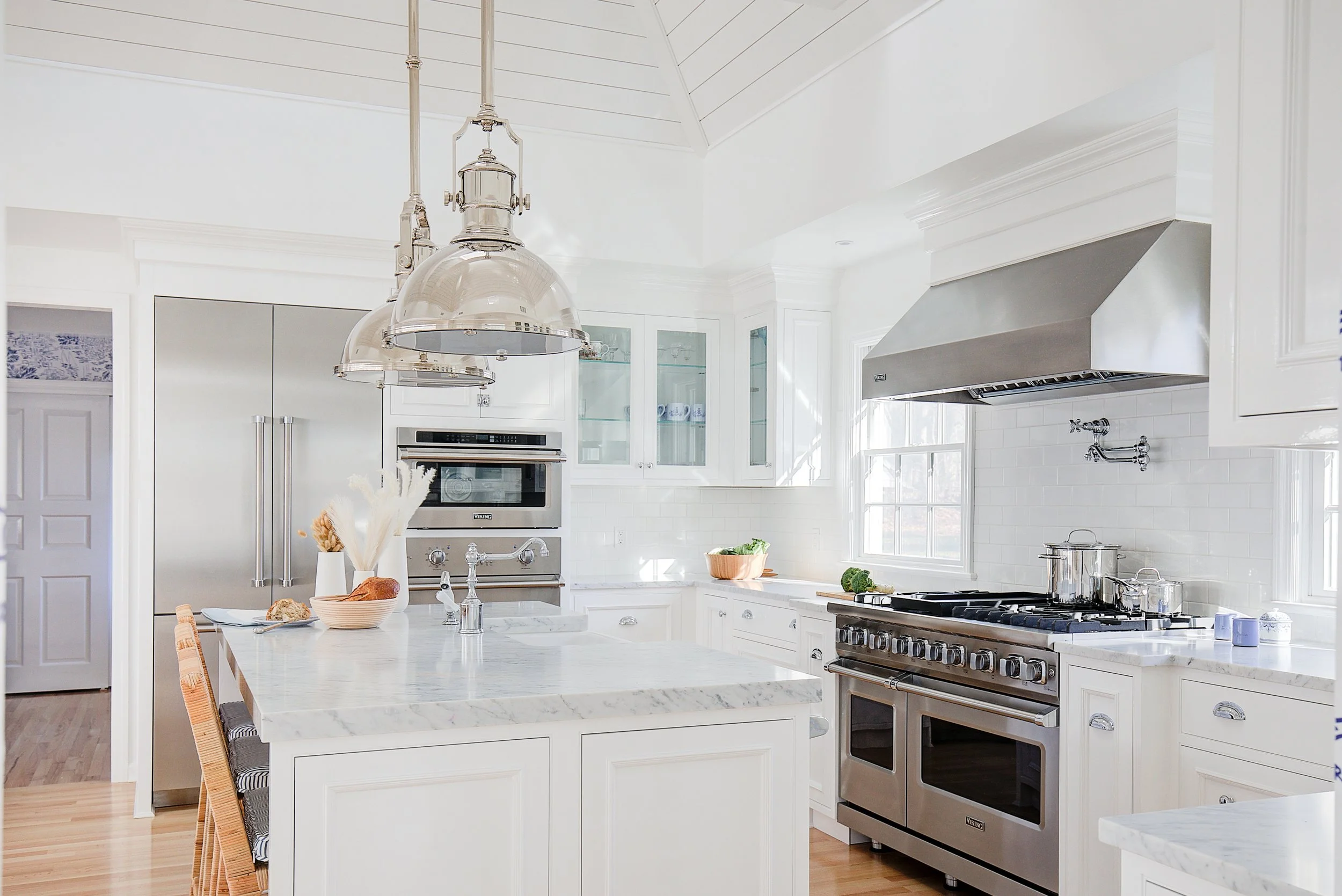
2. What "White Glove" Means
We're involved from the first meeting to the final detail. That means working with your architect on traffic patterns, windows, and room size, and with your builder on timelines and installs. We visit your jobsite and check on your finishes. When, on a recent North Shore project, the wall and cabinetry moldings did not miter together seamlessly, we designed a solution to blend them together. We take you slab shopping so you can see the full pieces of counter stone, not a square-foot sample, and devote a couple of hours at the appliance store opening doors and comparing options. Then we choose hardware, lighting, stools, paint, flooring, and window treatments with you.
3. Be Realistic About Timing
Someone recently called us in early October wanting a custom kitchen by Thanksgiving. I asked my team, "Of what year?" For a basic rip-and-replace:
Design: 6 to 8 weeks
Cabinet manufacturing: 10 to 14 weeks
Construction, electrical and plumbing rough-ins, cabinetry install, countertops, backsplash, appliances: about 5 to 10 weeks depending on scope
That's roughly six months, to basically remove the old and keep the same layout with new product. For more ambitious projects, which require either an architect, an addition, or moving any walls, that timeline increases dramatically.
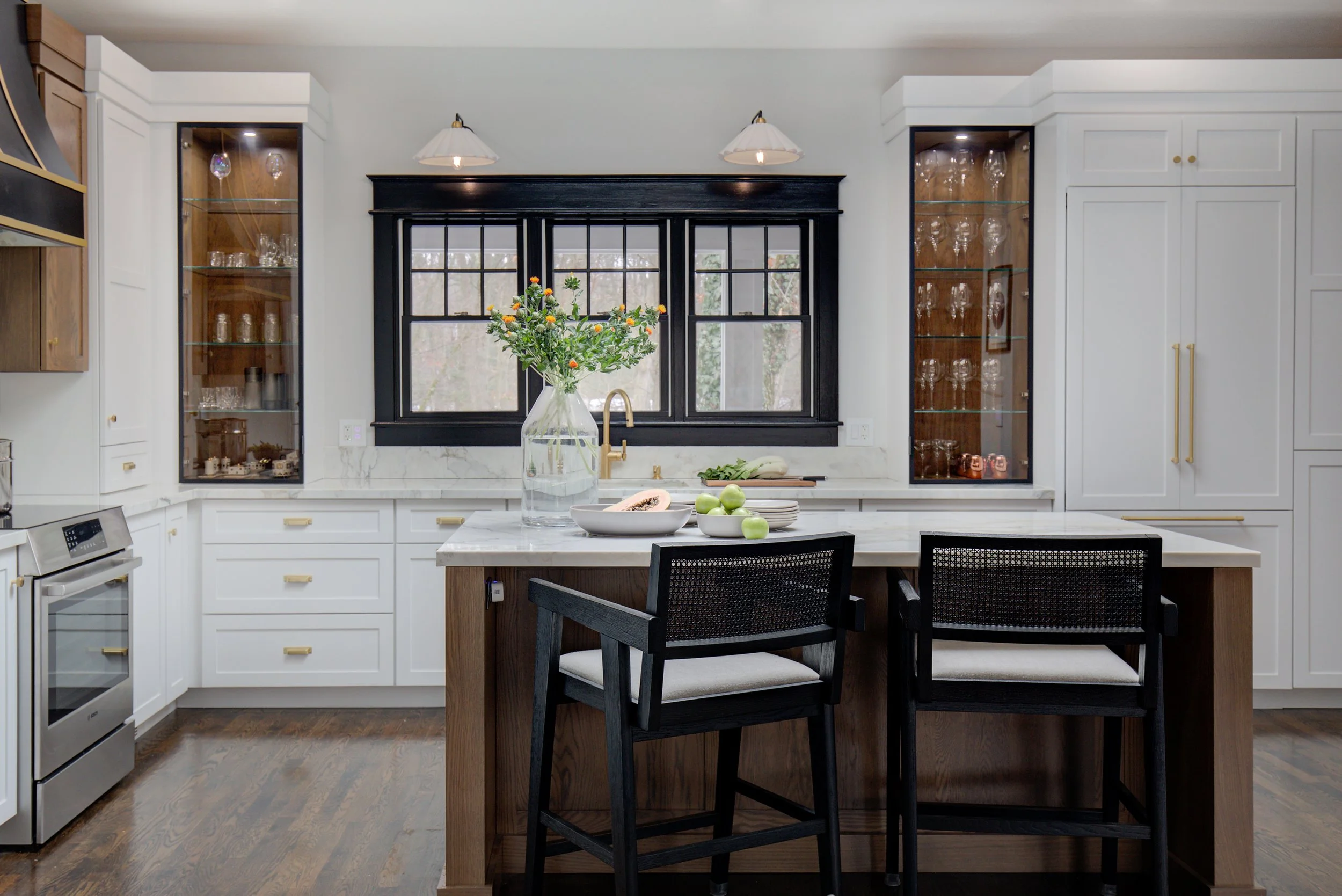
4. Where to Spend and Where to Save
Spend on:
Cabinets. I've seen entry-level cabinet paint and stain deteriorate within a year or two. Quality cabinetry is key.
Countertops. Whether you go with natural stone, which costs more, or quartz (man-made), do not cheap out. Quality varies with the actual slab of natural stone and the yard from which it came, and it also varies with the quartz manufacturer. Some are good, and some are not. Choose a quality brand that will last!
The sink. It sits under your stone, and you'll never replace it.
Save on:
Faucets. A $150 faucet is fine and easy to swap later.
Lighting. Plenty of attractive fixtures come at good prices.
Appliances: Choose the best brand you can afford. Thermador is fantastic value. But you don’t need every option available. Perhaps one fridge is enough. Do you really also need a beverage fridge and a separate ice maker? And a warming drawer?
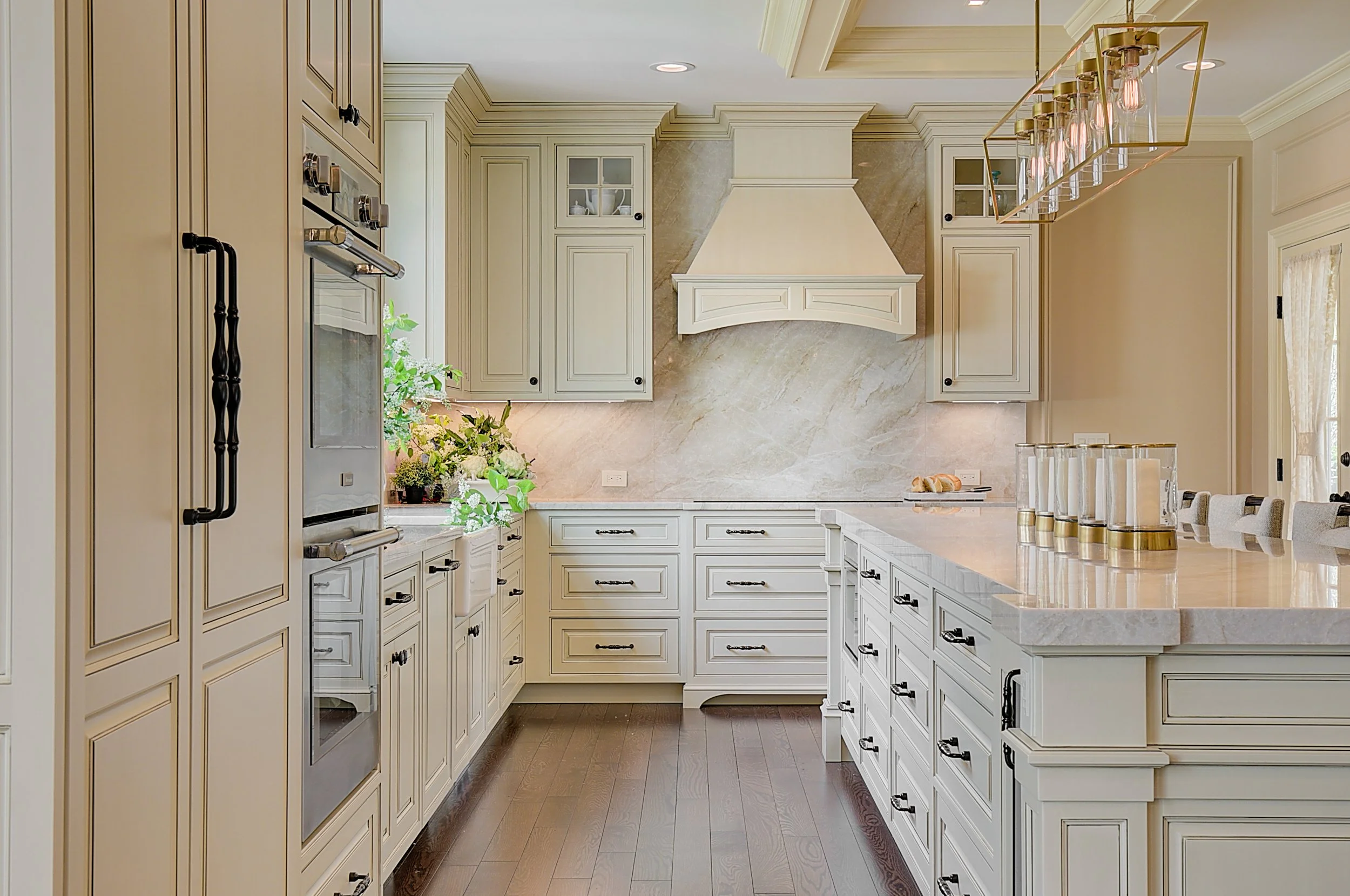
5. Ask About Their Process
A bad contractor is the biggest nightmare on any kitchen project. A designer who can't give the contractor detailed plans makes it worse. Those plans are the roadmap, and you need someone who can read it. A skilled kitchen designer knows how to measure, read architectural plans, draw to the 16th of an inch, specify cabinetry, and create highly detailed drawings of the same with accurate measurements.
They also understand the timing of when to choose appliances, order cabinets, discuss demo with the GC, have tile flooring ordered and on-site, and make sure lighting fixtures have arrived on the job. We keep enormous spreadsheets and use customized software to track every moment of your project, so everything is planned ahead instead of showing up at the jobsite to figure out what needs to be done.